

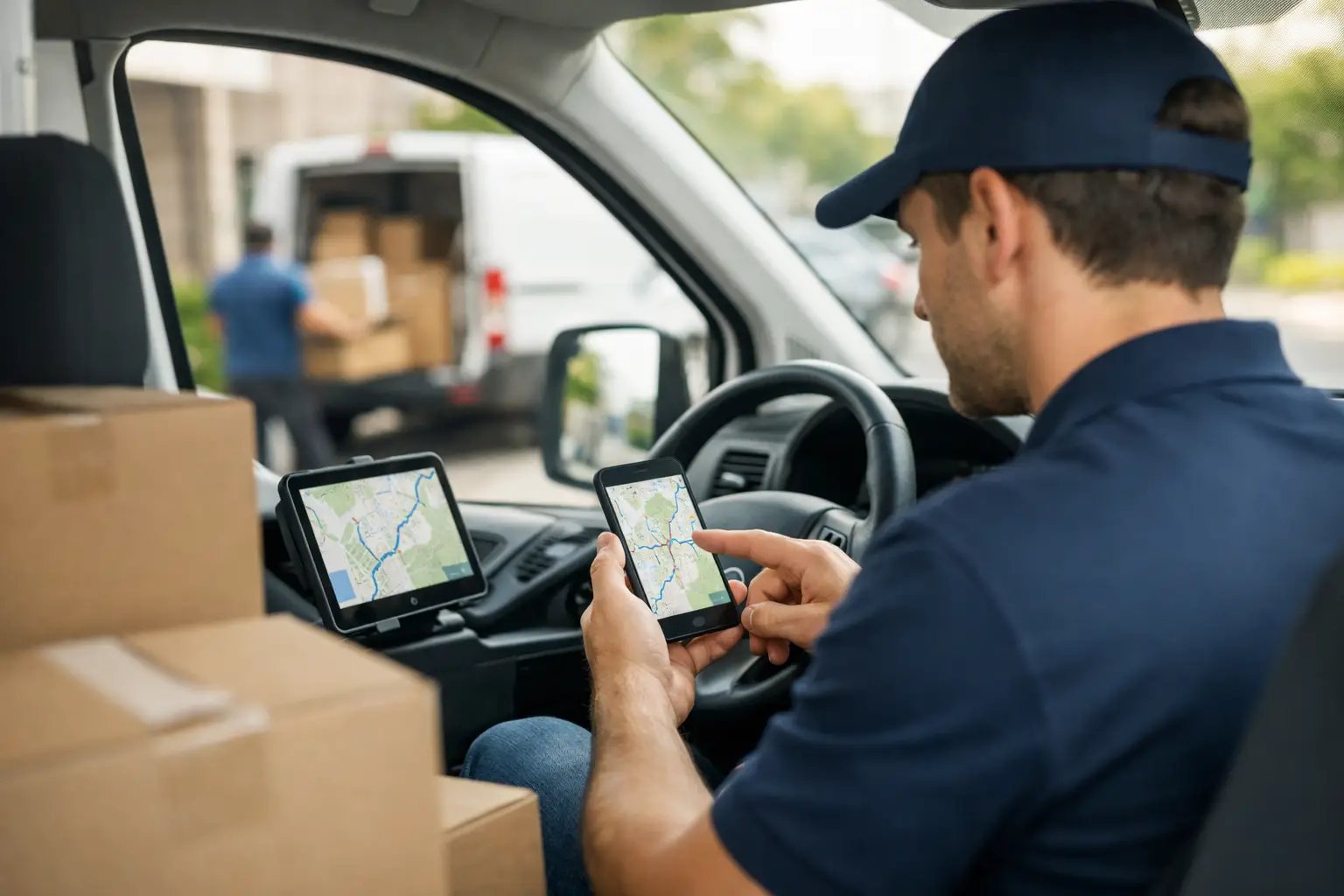
Best Delivery Route App for Small Business
RoadWarrior Team
If you are still building delivery routes by hand each morning, you are paying for it in miles, fuel, and late stops. A good delivery route app for small business fixes that fast. Instead of guessing stop order in Google Maps or texting drivers route changes all day, you get a smarter plan built for real delivery work.
For small operators, that difference shows up where it matters most - on the road and on the balance sheet. One bad route might only cost a few extra miles. Multiply that across days, drivers, and missed delivery windows, and the waste gets expensive. The right app helps you crush your routes without adding more admin work.
What a delivery route app for small business should actually solve
Small businesses do not need flashy software. They need fewer headaches between the first stop and the last one. That means a route app should do more than drop pins on a map.
It should automatically sequence multiple stops in the most efficient order, account for traffic, and let drivers navigate turn by turn without bouncing between tools. If you manage more than one driver, it should also help assign routes, share changes quickly, and give dispatchers visibility into what is happening in the field.
That sounds basic, but plenty of tools fall short. Some apps are fine for a salesperson planning six meetings. Others work for a solo driver with ten drops. A delivery business with 40, 80, or 200 stops needs something built for volume, speed, and daily repetition.
Why free mapping tools stop working
A lot of small businesses start with what they already know. They open Google Maps, enter a few stops, and head out. That works for a while, especially when routes are simple and delivery volume is low.
The problem starts when the route gets dense. Free mapping tools are made for navigation, not route optimization. They can tell you how to get from one address to the next, but they usually do not do the heavy lifting of arranging a full day of stops for maximum efficiency. If your driver has twenty or more deliveries, manual planning becomes a time drain before the van even leaves the lot.
There is also the coordination problem. Once you have multiple drivers, shared spreadsheets and text threads become the operating system. That means dispatchers spend time answering avoidable questions, drivers waste time confirming changes, and everyone is working from slightly different information.
A dedicated route app earns its keep by reducing those small failures. Better stop order. Less backtracking. Clearer assignments. Faster route changes. Fewer miles driven for the same revenue.
The features that matter most
The best app is not always the one with the longest feature list. It is the one that matches how your business runs every day.
Route optimization is the core requirement. If the app cannot quickly build the best order for multiple stops, nothing else matters much. Look for an app that can handle your actual stop count, not just ideal conditions. A bakery with 15 morning drops has different needs than a courier service with 150 deliveries.
Navigation matters too. Once the route is optimized, drivers need reliable turn-by-turn guidance that keeps them moving. If they have to export stops into another app or manually re-enter addresses, your process still has friction.
Dispatcher visibility becomes critical as soon as routes are shared across a team. Can someone in the office assign work, rebalance a route, or know whether a driver is running behind? If not, the app may work for a solo operator but break down for a growing business.
You should also pay attention to ease of use. A powerful app that takes weeks to learn is a problem for small businesses that need results now. The best tools are fast to set up, simple enough for drivers to use without a long training cycle, and strong enough to support real route volume.
How to evaluate a delivery route app for small business
Start with your route reality, not the product demo. Count the average number of stops per driver, the number of drivers on a typical day, and whether routes change after dispatch. Those three factors tell you a lot about what kind of software you need.
If you are an owner-operator making local deliveries, your priority is likely speed and simplicity. You need to load addresses, optimize the route, and get moving in minutes. Price matters, but wasted time matters more. Saving even 30 to 60 minutes a day can justify the monthly cost quickly.
If you run a small team, your checklist gets broader. You need route assignment, driver coordination, and some level of dispatch control. The time savings are not just in driving. They come from reducing the office work around planning and updating routes.
It also helps to test for edge cases. Can the app handle recurring customers, time-sensitive stops, or route changes after the day starts? Can it scale with you if your stop count doubles during peak season? Many businesses outgrow basic planners because they only solve the first layer of the problem.
What results should you expect?
A solid route app should produce measurable gains quickly. The most common wins are lower mileage, reduced fuel spend, fewer hours spent planning routes, and more stops completed per day.
For many small businesses, the first improvement is simply less chaos. Drivers leave earlier because routes are ready faster. Stop order makes more sense. Dispatchers are not constantly reacting. That operational calm matters because it compounds. Better mornings usually lead to better afternoons.
The second gain is cost control. When routes are tighter, vehicles spend less time idling, circling, or doubling back. With fuel and labor costs where they are, that is not a minor improvement. It can be the difference between a route that is profitable and one that only looks busy.
Then there is customer experience. Faster, more predictable routing makes it easier to meet delivery windows and communicate delays when they happen. Small businesses win repeat business by being reliable, and route quality plays a bigger role in that than most teams realize.
Where simple apps help - and where they hit a wall
There is nothing wrong with starting simple. If you are a one-person operation with a manageable number of stops, a lightweight route planner can be enough. You may not need fleet tools, proof of delivery, or advanced dispatch features on day one.
But growth exposes weak systems fast. More stops, more drivers, and more same-day changes create operational drag. That is when businesses realize they do not just need directions. They need a platform that helps them run the work.
This is where a tool like RoadWarrior stands out for many route-based businesses. It is built to optimize high stop counts, support real-world delivery navigation, and give teams a practical way to coordinate routes without overcomplicating the workflow. The value is straightforward - save time, cut miles, and keep the day under control.
How to choose without overbuying
The smartest choice is usually one step ahead of your current needs, not five steps ahead. If you buy too small, you will outgrow it fast. If you buy too much, your team may never use the extra features.
Look for a route app that is easy for drivers to adopt but strong enough to support growth. Transparent pricing matters here. Small businesses need to know what each driver costs per month and whether team features are included or added separately. Hidden complexity often turns into hidden cost.
A free trial is useful, but only if you test it with real routes. Load an actual delivery day. Use your real stop count. Have a dispatcher and a driver both try it. You want proof that it saves time in your environment, not just in a polished demo.
The real question behind the software search
When people search for a delivery route app for small business, they are usually asking a more direct question: how do I stop wasting time and money every day on routing?
That is the standard your app should meet. Not fancy dashboards. Not feature overload. Real operational gains that show up in fewer miles, better route execution, and less scrambling across your team.
If your business depends on multi-stop routes, routing is not a side task. It is part of your margin. Get that system right, and the whole day runs better. Your drivers move faster, your customers get better service, and you get more room to grow without adding chaos.
Choose the tool that helps you get routes out the door faster and finish the day stronger. That is how small businesses find their inner RoadWarrior.
Tags