

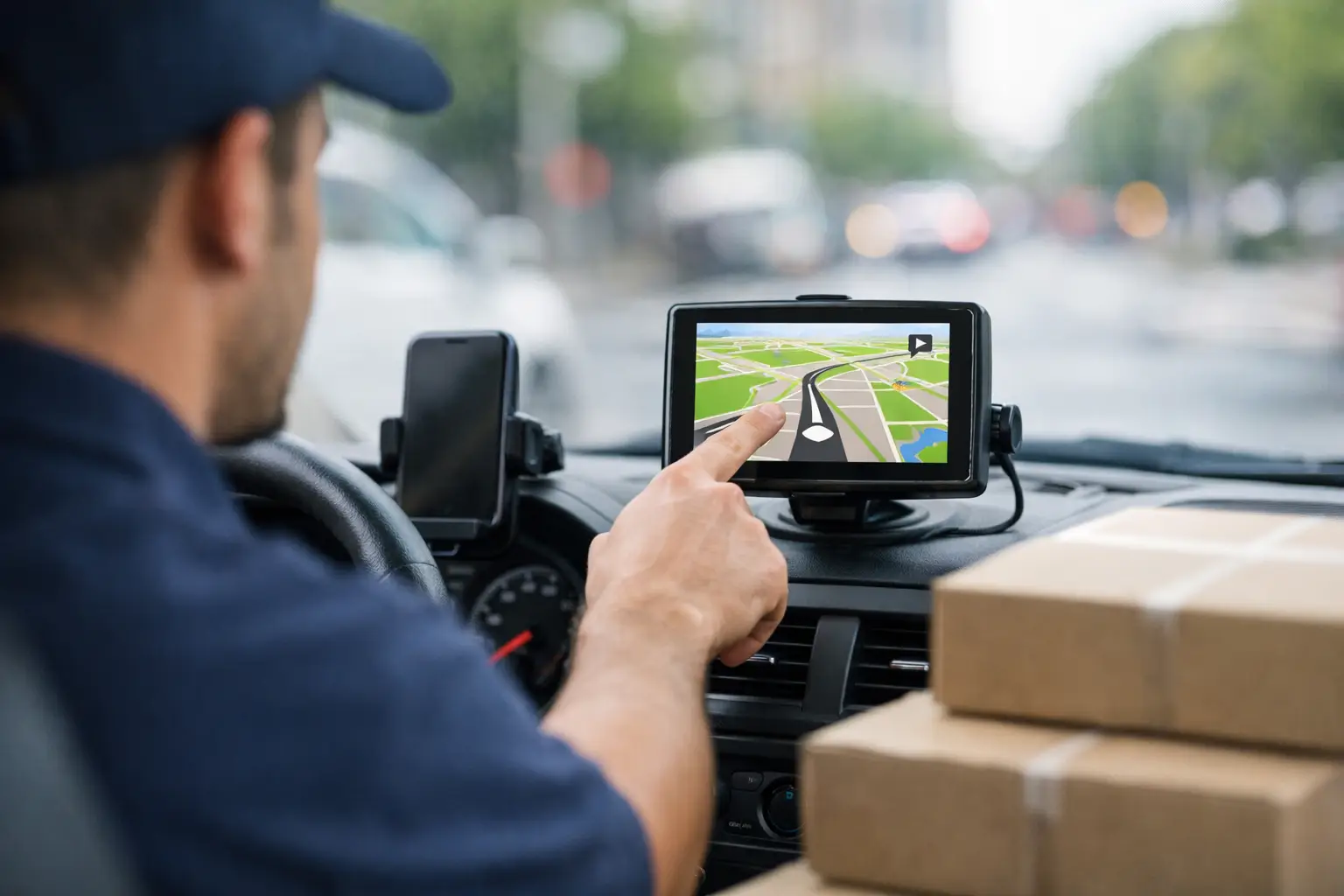
Best GPS Navigation for Delivery Drivers
RoadWarrior Team
A missed left turn at 4:45 p.m. can cost more than two minutes. It can push the next stop into rush hour, delay a delivery window, add extra miles, and turn a manageable day into a scramble. That is why gps navigation for delivery drivers is not just about getting from point A to point B. It is about protecting time, fuel, and route performance across an entire shift.
For anyone running more than a handful of stops, basic turn-by-turn navigation stops being enough. A delivery driver needs navigation that can handle the real shape of the work - traffic, stop order, customer time windows, dead ends, apartment complexes, and the constant pressure to finish strong. If your map app is only telling you where to turn next, but not helping you run a smarter route, you are leaving time and money on the road.
What delivery drivers actually need from GPS navigation
Most consumer navigation apps are built for single trips. They are great when you need the fastest way to one destination. Delivery work is different. The challenge is not one drive. It is a chain of drives, each one affecting the next.
That means gps navigation for delivery drivers has to do two jobs at once. First, it needs reliable turn-by-turn directions with live traffic awareness. Second, it needs to support the route itself by making sure stops are sequenced efficiently. If those two pieces are disconnected, drivers waste time bouncing between apps, manually reordering addresses, and second-guessing whether the route still makes sense.
A strong delivery navigation setup should also reduce mental load. Drivers are already managing parking, customer notes, gate codes, loading order, and proof of delivery. They should not have to play dispatcher from the front seat. Good navigation cuts the decision count, keeps the day moving, and helps drivers crush their routes without burning extra energy.
Why free map apps fall short for multi-stop work
Free navigation tools have their place. If you are handling two or three stops, they may be enough. But once the route gets larger, the limits show up fast.
The biggest issue is stop optimization. A standard map app may let you add several stops, but it usually will not build the most efficient order for a delivery route with dozens of destinations. Drivers end up dragging stops around manually or just following a list in the order it was received. That creates unnecessary backtracking, longer drive times, and more fuel burned than needed.
There is also the issue of scale. Delivery routes can include 20, 50, or hundreds of stops depending on the business. A tool designed for casual travel is not built for that kind of volume. Even when it supports multiple stops, the workflow can get clunky fast.
Then there is coordination. Individual drivers may be able to improvise, but teams cannot rely on improvisation. Dispatchers need to assign routes, monitor execution, and make changes when the day shifts. General navigation apps were not built to support that operational reality.
The difference between navigation and route optimization
This is where many businesses lose efficiency without realizing it. Navigation tells you how to get to the next stop. Route optimization decides what the next stop should be.
That distinction matters because a driver can follow perfect turn-by-turn directions and still run an inefficient day. If the stop sequence is wrong, navigation only helps you execute a bad plan more accurately.
For delivery drivers, the best setup combines both. You want software that sequences stops based on travel time, traffic, and route constraints, then guides the driver through the day with clear GPS directions. That is what turns a route from reactive to efficient.
It also changes the economics of the job. Fewer wasted miles means lower fuel costs. Better sequencing means more stops completed in the same shift. Smarter routing means less stress at the end of the day when time windows get tight. Those are not minor gains. Over weeks and months, they add up fast.
How to choose gps navigation for delivery drivers
The right choice depends on how you work. An independent courier with 15 stops has different needs than a local business managing multiple drivers across a city. Still, there are a few features that matter almost every time.
Look for true multi-stop planning
If you regularly run more than a few stops, this is the first filter. You need a tool that can optimize stop order automatically, not just store a list of addresses. The bigger your route volume, the more value this creates.
A good system should let you import stops quickly, rearrange priorities when needed, and send drivers into the field with a route that already makes operational sense.
Make sure traffic is part of the route logic
Traffic-aware navigation is useful. Traffic-aware route planning is better. There is a real difference between rerouting around a jam after you hit the road and building the day with likely congestion in mind.
In urban and suburban delivery work, this can be the difference between staying on pace and falling behind before lunch.
Check for driver-friendly mobile workflow
The app should be easy to use while working, not just easy to demo. Drivers need fast address loading, clean stop lists, clear next-stop visibility, and dependable guidance once they are moving.
If the workflow creates friction, drivers will work around it. That usually means paper lists, screenshots, or switching between apps, all of which slow the route down.
Think beyond one driver if you run a team
For managers and dispatchers, navigation is only one piece of the picture. You also need visibility into who is assigned where, whether routes are progressing, and how to adapt when a driver is delayed or a stop is added.
This is where a platform built for route operations earns its keep. Team coordination features often matter more than one extra map setting because they help the whole day run cleaner.
What better navigation changes on the road
When delivery drivers get the right navigation support, the gains show up in ordinary moments. The first route of the morning gets built faster. Midday changes are easier to absorb. Drivers spend less time circling blocks or doubling back across town. Dispatchers spend less time answering where-are-you calls.
The benefit is not just speed. It is consistency. Good route navigation makes the day more predictable, which matters when customers expect tight delivery windows and businesses are trying to control labor and fuel costs.
It also improves driver experience. That matters more than some operators admit. Drivers who spend the day fighting bad routes get frustrated fast. Drivers who have a clear plan and clean navigation can stay focused, finish stronger, and often get home earlier. That is good for retention as well as productivity.
When specialized delivery navigation is worth paying for
If delivery work is central to your business, the answer comes sooner than most teams expect. Once route inefficiency starts affecting labor hours, gas spend, customer satisfaction, or daily capacity, free tools stop being cheap. They just hide the cost in missed productivity.
Paid delivery navigation and route planning tools make the most sense when you run dense routes, have recurring stops, manage multiple drivers, or need to handle frequent changes. They are also valuable when dispatchers are spending too much time building routes by hand.
A purpose-built platform like RoadWarrior is designed for exactly this gap between basic maps and real route operations. It gives drivers optimized multi-stop routes and GPS guidance, while giving teams better control over assignment and execution. That means less time planning, fewer unnecessary miles, and a smoother day in the field.
There are trade-offs, of course. If your route volume is low and your stop order rarely changes, a specialized tool may be more than you need. But if you are juggling dozens of stops and trying to improve margins, better routing is usually one of the fastest operational wins available.
The best gps navigation for delivery drivers is the one that saves the whole route
Drivers do not get paid for staring at maps, fixing bad stop order, or wondering if there was a smarter path across town. They get paid to complete stops efficiently and keep the day moving.
That is the real standard for gps navigation for delivery drivers. Not whether it can guide a car down the right street, but whether it helps the driver finish more deliveries with less waste and less friction. When your navigation tool supports the full route instead of just the next turn, every stop gets easier.
If your current setup still feels like a patchwork of maps, notes, and manual guesses, that is your signal. Better navigation does not just help you drive. It helps you run a better business, one route at a time.
Tags