

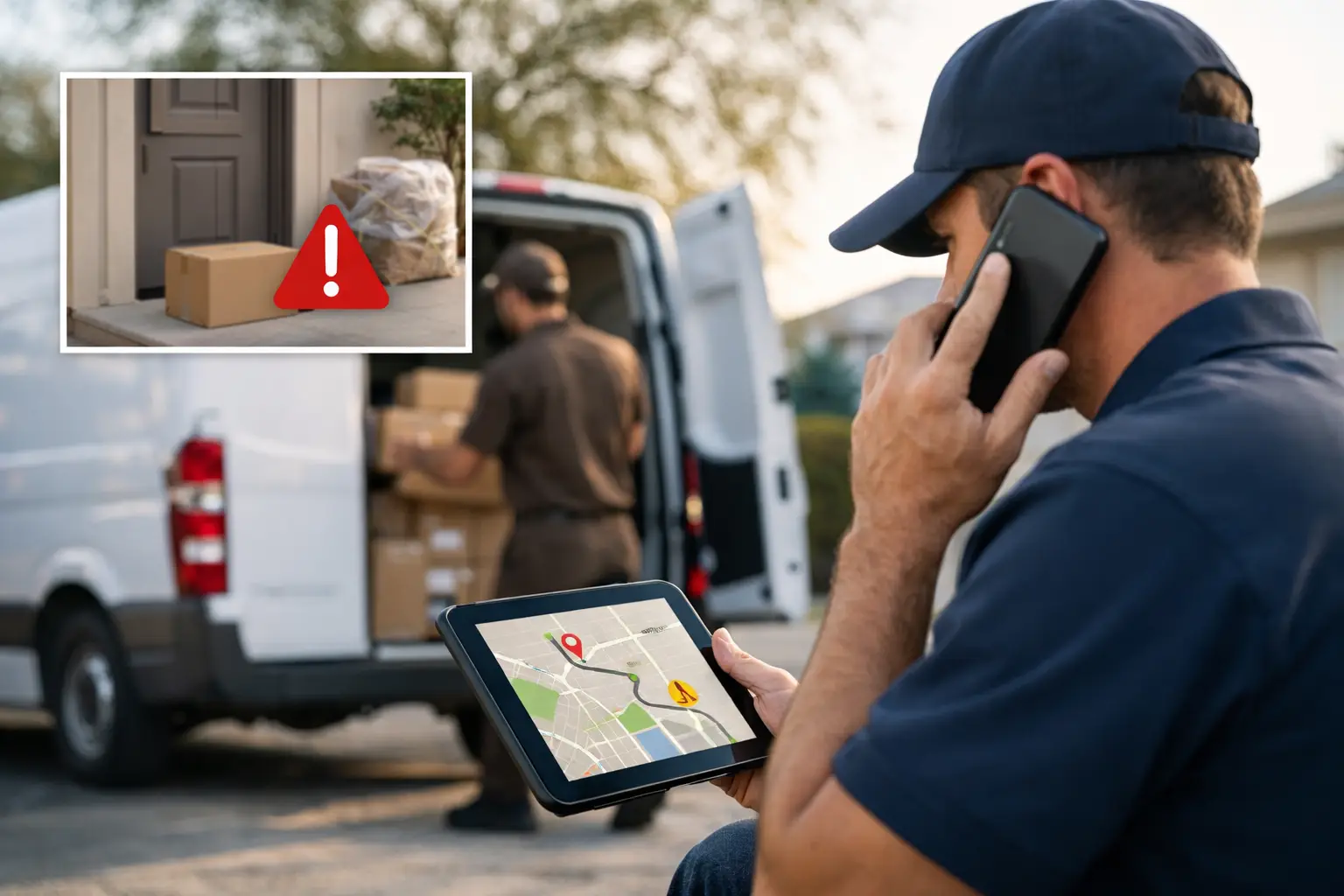
Delivery Exception Management That Saves Routes
RoadWarrior Team
A missed delivery at stop 18 can throw off the next 20 stops if nobody makes a decision. The driver loses time, the customer loses confidence, and the dispatcher gets pulled into a string of calls and texts. Delivery exception management gives your operation a clear way to spot the issue, choose the next move, and keep the route productive.
For drivers and small delivery teams, exceptions are not rare edge cases. Gates are locked. Customers are unavailable. Addresses are wrong. Traffic turns a 10-minute drive into 35. The goal is not to eliminate every disruption. It is to handle each one without wasting miles, losing proof of what happened, or leaving the customer wondering where their order went.
What delivery exceptions look like on a real route
A delivery exception is any event that prevents a stop from being completed as planned. That could mean a failed attempt, a late arrival, an incomplete order, a damaged package, an unsafe location, or a customer-requested change.
The most expensive exceptions are often the small ones that go unrecorded. A driver marks a stop complete even though the item was not delivered. A customer says they never received it. An address correction sits in a text message while the driver keeps following the original route. By the time someone notices, the team has already spent extra labor, fuel, and customer goodwill.
A practical process separates exceptions into two groups. The first group can be resolved in the field, such as calling the customer, correcting an address, or moving a stop later in the day. The second requires escalation, such as missing inventory, a payment issue, vehicle trouble, or a safety concern. Drivers need to know which is which before the route starts.
Why fast decisions matter more than perfect plans
Every route plan makes assumptions: stops will be available, traffic will stay reasonable, and service times will be close to estimate. Real work does not follow assumptions. A strong exception process gives drivers enough authority to act quickly while keeping dispatchers informed when a decision affects the wider route.
For example, a customer is not home for a signature-required delivery. The driver may have three reasonable options: wait briefly, contact the customer, or mark the stop for a later attempt. The right answer depends on the delivery window, the value of the item, the distance to return, and what remaining stops are nearby. Waiting 15 minutes may be worth it on a dense urban route. On a rural route with 12 miles between stops, it may cost far more than a second attempt.
The same logic applies to traffic and road closures. A general navigation app can redirect one vehicle, but a multi-stop delivery operation needs to consider the entire day. If a delay makes several appointments unrealistic, the best move might be to resequence the remaining stops, notify affected customers, and protect the deliveries that have tighter time commitments.
Give drivers clear decision rules
Drivers should not have to call a manager for every locked gate. Build simple rules around the exceptions your team sees most often. For example, define how long a driver should wait, when they should call or text a customer, what evidence is required for a failed attempt, and when a stop should be moved rather than skipped.
These rules should be specific enough to prevent guesswork but flexible enough for local conditions. A technician carrying time-sensitive parts has different priorities than a meal delivery driver. A route with scheduled service appointments needs a different escalation path than a route dropping off non-signature packages.
Record the reason, not just the result
“Not delivered” is not useful enough. Your team needs a consistent reason code, such as no access, customer unavailable, incorrect address, item unavailable, weather delay, or vehicle issue. A short driver note and a photo or signature when appropriate can settle disputes and reveal patterns later.
That record also protects drivers. If a customer challenges a delivery attempt, a time-stamped note showing that the gate was locked or access instructions were missing gives the office something concrete to work with.
Build a delivery exception management workflow
The best workflow is simple enough to use during a busy route. It should reduce back-and-forth, not create another app screen drivers avoid.
Start before wheels roll. Review stops for missing unit numbers, unclear access instructions, tight time windows, special handling requirements, and high-priority customers. If the same address has failed before, flag it early. A two-minute check before dispatch can prevent a 30-minute detour later.
During the route, drivers need a quick way to mark a stop status, add a reason, and communicate the next action. That might be “customer contacted, retry after 2 p.m.” or “wrong address, awaiting correction.” Dispatchers should see exceptions as they happen instead of discovering them after the driver returns.
Then make the route decision. If the stop can be recovered without hurting the rest of the day, place it where it makes the most geographic sense. If it cannot, close the attempt properly and schedule the next step. Do not send a driver back across town just because the original stop order says so. That is how a single exception becomes an hour of unplanned driving.
Finally, close the loop with the customer. A clear message that explains the status and next action is better than silence. Customers are more forgiving of a failed attempt when they know what happened and when to expect a retry.
Use route optimization to limit the damage
Route optimization cannot prevent a customer from being unavailable, but it can make exceptions less costly. When a stop changes, drivers need to see the impact on the remaining route. The next best stop may not be the one that was originally scheduled next.
This is especially valuable for teams handling 20, 50, or hundreds of stops. Manually reshuffling addresses in a map app creates mistakes fast. A route planner built for multi-stop work can account for location, traffic, stop order, and route constraints so the driver can get back to productive work sooner.
RoadWarrior helps drivers and teams plan, adjust, and execute multi-stop routes without spending the day rebuilding them. For a dispatcher, that means less time chasing location updates. For a driver, it means fewer wasted miles after a stop goes sideways.
There is a trade-off, though. Constantly re-optimizing for every minor delay can frustrate customers who were promised a specific arrival window. Use optimization to protect commitments, not simply to chase the lowest mileage. Priority stops, service windows, driver capacity, and customer communication still matter.
Measure the exceptions that cost you money
A monthly exception report should do more than count failed deliveries. Look for the reason, route, driver, customer location, time of day, and cost of recovery. The goal is to find repeatable problems you can fix upstream.
If incorrect addresses spike on one sales channel, improve address validation at order entry. If no-access exceptions cluster at commercial buildings, collect gate codes and receiving hours before the route is planned. If failed attempts rise late in the day, your service-time estimates may be too optimistic or your routes may be overloaded.
Watch these four operational measures together:
- First-attempt completion rate
- Average miles and minutes spent recovering exceptions
- Repeat exceptions by address or reason code
- Customer response time after a failed or delayed stop
A high completion rate alone can hide inefficient behavior. Drivers may be working overtime or backtracking across town to preserve that number. Pair completion data with mileage, route duration, and labor time to see the full cost.
Make the process work in the field
The most effective delivery exception management system respects the person behind the wheel. Drivers need enough structure to make reliable decisions, but they also need tools that are fast when they are parked at a curb, standing at a loading dock, or trying to avoid their next appointment running late.
Train with real scenarios from your routes, not generic examples. Ask drivers what information they are missing at the point of delivery. Often, the answer is basic: a contact number, a gate code, a service window, a note about where to park, or confirmation that a signature is required.
When exceptions are handled well, they become useful route data instead of daily chaos. Give your drivers a clear next move, give dispatchers visibility before small issues grow, and keep the route focused on the stops that can still be completed. That is how your team cuts wasted miles, protects customer trust, and gets home earlier.
Tags