

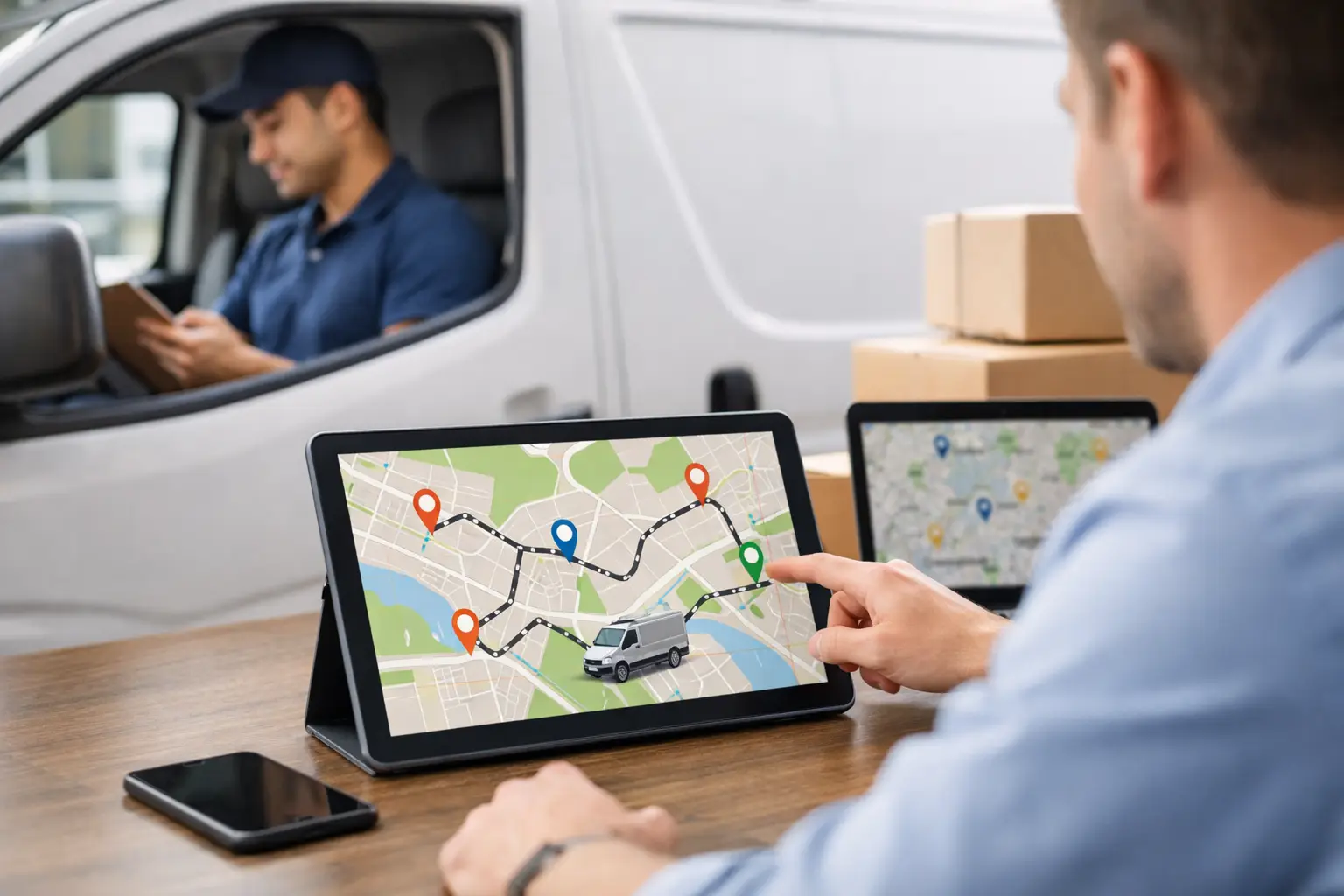
Delivery Team Route Optimization Example
RoadWarrior Team
At 8:07 a.m., a dispatcher has 58 deliveries, three drivers, a two-hour pickup window, and one customer who just asked for an earlier drop-off. That is where a delivery team route optimization example becomes useful: not as a map with pins, but as a working plan that protects driver time, delivery promises, and fuel spend.
The goal is not simply to find the shortest lines between every address. A delivery team needs routes that account for vehicle capacity, service windows, driver start locations, traffic, breaks, pickup commitments, and the reality that a customer can call with a change halfway through the day. Here is how a small delivery operation can turn a messy route sheet into a plan its drivers can actually execute.
A delivery team route optimization example
Picture a local specialty food distributor serving restaurants, cafes, and small markets. Every morning, its dispatcher coordinates three refrigerated vans from a warehouse outside the city. The team has 58 stops spread across the metro area, with a mix of deliveries, returns, and one scheduled afternoon pickup.
Without optimization, the dispatcher splits the stops by ZIP code, sends each driver a list, and lets them decide the stop order. It feels quick, but the result is usually uneven. One driver gets trapped in downtown traffic with 24 stops, another finishes early with only 14, and a third has to backtrack 18 miles to make the pickup.
For this day, the team enters the delivery addresses, customer time windows, service times, vehicle capacities, and driver starting points. The dispatcher also marks five stops as priority accounts that must be completed before noon. The route plan has one hard rule: Driver 2 must reach the warehouse pickup by 1:30 p.m. with enough cooler space for the returned containers.
The optimized result assigns 20 stops to Driver 1, 19 to Driver 2, and 19 to Driver 3. The stop counts are close, but the real win is the workload balance. Driver 1 handles the dense downtown cluster on foot-friendly blocks. Driver 2 receives the western corridor and the afternoon pickup. Driver 3 covers the suburban stops where parking is easier but drive time between locations is longer.
Compared with the team's manual plan from the week before, this route setup cuts projected driving from 214 miles to 176 miles. It also reduces total drive time by 2 hours and 18 minutes across the team. Those numbers matter because 38 fewer miles is not just less fuel. It means fewer late arrivals, less wear on the vans, and more room to handle a same-day request without sending someone across town.
Start with the details that change the route
A route optimizer can only work with the information it receives. Street addresses are the starting point, but delivery teams should also capture the details that affect route execution.
Customer time windows are often the biggest factor. A restaurant that accepts deliveries only from 9:00 to 10:30 a.m. should not be treated like a retail customer open until 6:00 p.m. In the same way, a stop that takes 15 minutes to unload needs more time than a doorstep drop that takes two minutes.
Vehicle and driver constraints also matter. A van carrying frozen items may have a capacity limit that changes which stops belong together. Some drivers may be certified for a particular product or familiar with a difficult downtown zone. If a customer requires a liftgate, signature, or proof of delivery, include that requirement before the route is built rather than fixing the assignment after drivers leave.
This is where basic navigation apps fall short. They can help a driver reach the next address, but they do not reliably balance a multi-driver workload around business rules. A team route needs to answer two questions at once: What is the best sequence, and who should own each stop?
Assign work before the day gets away from you
The dispatcher in this example does not optimize all 58 stops as though every driver were interchangeable. First, they set the warehouse as the start point for all three vans, apply the 1:30 p.m. pickup constraint to Driver 2, and set vehicle capacity limits. Then they let the optimization process build the best stop order and distribution around those rules.
There is a trade-off here. Fully optimizing every stop across the whole team may reduce total miles, but it can also send drivers into unfamiliar areas or make daily territories inconsistent. For some teams, stable territories are worth a few additional miles because drivers know the customers, parking patterns, and building access rules. For other teams with expensive fuel, tight delivery windows, or fluctuating volume, a more flexible daily assignment will pay off.
The right approach depends on the operation. The key is to make that choice deliberately instead of accepting whatever route order happens to emerge from a spreadsheet.
What happens when the route changes at noon
At 11:42 a.m., one of the distributor's priority customers calls. Their kitchen is short on stock and asks whether their delivery can arrive before 1:00 p.m. The original route placed them on Driver 3's schedule for 2:15 p.m.
A manual response might involve group texts, phone calls, and a driver pulling over to rearrange stops. The dispatcher checks the live plan instead. Driver 1 is 1.8 miles from the customer after their next stop, while Driver 3 is 6.4 miles away and heading toward another time-sensitive delivery.
The dispatcher reassigns the urgent stop to Driver 1 and reoptimizes the remaining stops. Driver 1 takes on one extra delivery but still finishes within their planned shift. Driver 3 avoids a detour and keeps their afternoon commitments. The team makes the new delivery by 12:32 p.m.
That is the practical value of team optimization. It is not about creating a perfect route at 8:00 a.m. and hoping reality cooperates. It is about making fast, informed decisions when reality does not.
Measure the results beyond miles
Miles and drive time are the clearest starting metrics, but a delivery manager should watch a few other numbers over several weeks. On-time delivery rate shows whether routes respect customer windows. Stops completed per paid driver hour reveals whether workload is balanced. Fuel cost per route and overtime hours show whether the savings are reaching the bottom line.
For the food distributor, the first month of using optimized team routes produces a 14% reduction in mileage and a meaningful drop in overtime. But the dispatcher notices another benefit: fewer driver check-in calls. Drivers can see their assigned sequence and navigate to each stop, so the dispatcher spends less of the day answering, “Where should I go next?”
That saved attention matters. Dispatchers are often responsible for customer calls, warehouse coordination, exceptions, and driver support. Every manual route adjustment they avoid gives them time to solve the issues that actually need human judgment.
Common mistakes that erase route savings
The most common mistake is treating every address as equal. Stops have different service times, delivery windows, access requirements, and revenue value. A route that looks efficient on a map can fail quickly when a driver spends 25 minutes waiting for a receiving dock to open.
Another mistake is optimizing once and never reviewing the plan. Traffic, failed deliveries, canceled orders, and urgent pickups can change the best route by midday. Teams need a workflow for updating assignments without confusing drivers or creating duplicate visits.
Finally, avoid optimizing solely for the fewest miles. The absolute shortest route may overload one driver, violate a delivery promise, or leave no capacity for a return pickup. Lower miles are valuable, but a route should support the operation's real priorities.
Build a repeatable daily routing workflow
The distributor now uses the same simple operating rhythm each morning. Orders are finalized by a cutoff time, stop details are checked for missing instructions, and the dispatcher sets time windows and vehicle rules before routes are optimized. Drivers receive their routes before loading is complete, which gives them time to flag access issues or customer-specific concerns.
Once vans are moving, the dispatcher monitors exceptions rather than micromanaging every stop. If an urgent job comes in, they compare available drivers by distance, remaining capacity, committed delivery windows, and expected finish time. Then they adjust the plan and send the updated stop sequence directly to the right driver.
A platform such as RoadWarrior Flex makes this process easier by pairing dispatcher control with driver-ready navigation. The point is not to add another complicated system to the day. It is to replace manual route building, scattered texts, and guesswork with a plan the whole team can follow.
Your first optimized day will not eliminate every surprise. It will give your team a better way to respond to them. Start with accurate stop data, set the rules that matter, and let each driver spend more of the day delivering instead of circling, backtracking, and waiting for the next instruction.
Tags