

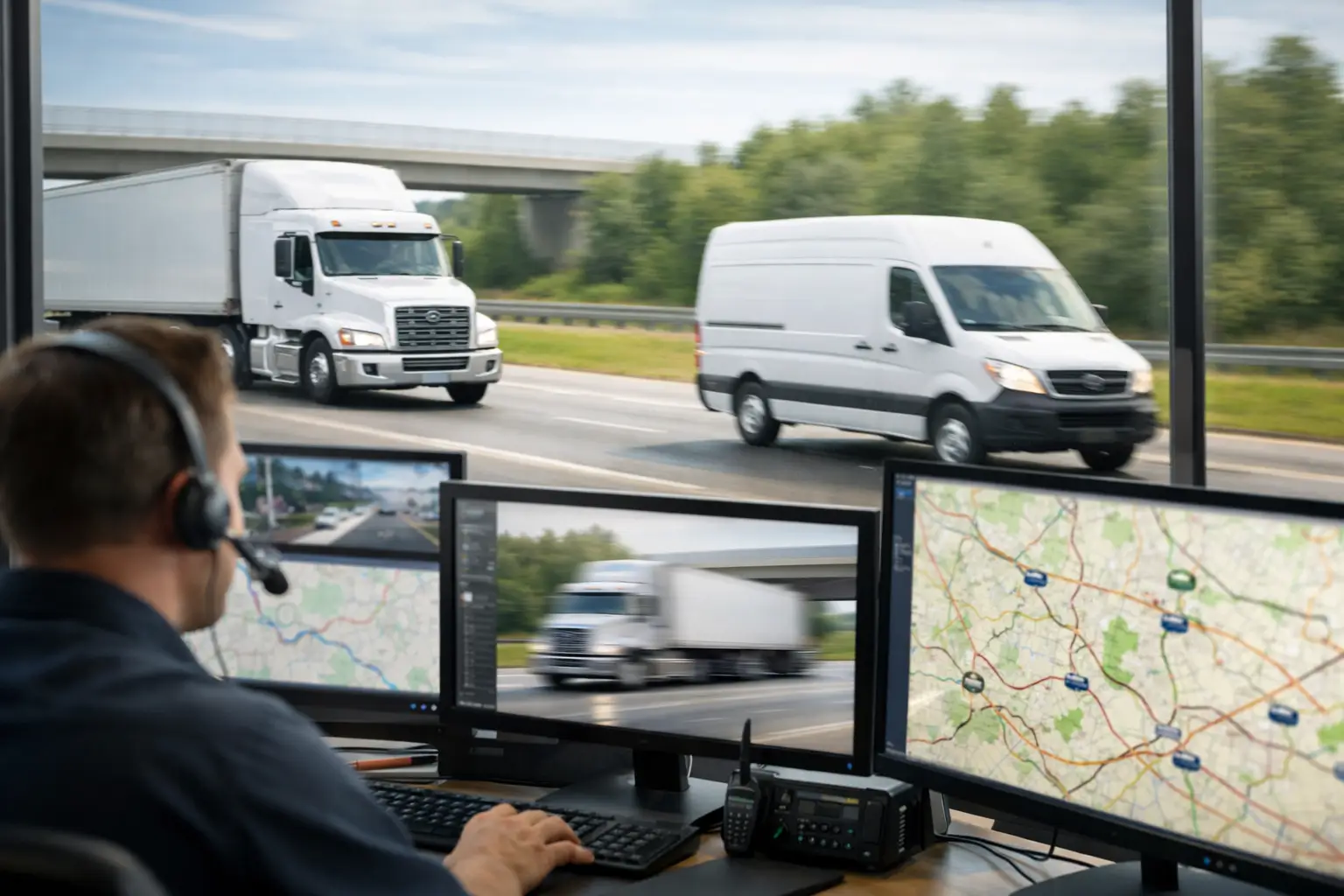
Fleet Dispatch That Keeps Every Route Moving
RoadWarrior Team
A late pickup, a customer who needs an earlier arrival, and a driver calling for the next stop can turn a normal day into a scramble. Strong fleet dispatch turns that scramble into a controlled workflow. It gives dispatchers a clear view of the work, gives drivers an organized plan, and keeps every mile tied to a real business outcome.
For delivery teams, field service companies, sales organizations, and owner-operators growing beyond one vehicle, dispatch is more than assigning addresses. It is the daily system for deciding who goes where, in what order, and how the team responds when the plan changes.
What fleet dispatch should accomplish
At its most useful, fleet dispatch connects jobs, vehicles, drivers, and routes in one operating process. A dispatcher imports or enters stops, assigns them to the right driver, builds an efficient route, sends it to the driver's phone, and monitors execution as the day unfolds.
The goal is not simply to fill every driver's schedule. It is to complete the right work with fewer miles, less idle time, and fewer avoidable customer issues. That requires balancing several priorities that can compete with each other: appointment windows, driver territory, vehicle capacity, customer priority, traffic, skills, and total drive time.
A shortest-distance route is not always the best route. A technician may need a specific certification. A delivery truck may have a weight limit. A key customer may require a narrow service window. Effective dispatch accounts for those real-world constraints instead of treating every stop as a pin on a map.
Why manual dispatch breaks down quickly
A few stops can be managed through texts, phone calls, and a spreadsheet. Once the volume grows, that process starts costing more than it saves. Dispatchers spend time copying addresses, checking maps, calling drivers, and rebuilding routes after every change. Drivers get incomplete instructions or outdated stop sequences. Customers feel the fallout through missed ETAs and delayed service.
General navigation apps can guide a driver from Point A to Point B, but they were not built to coordinate a full workday across multiple vehicles. They do not give a dispatcher a practical way to assign 40, 100, or hundreds of stops, balance workloads, and send each driver an optimized sequence.
The hidden cost is often mileage. When drivers create routes independently, they may double back across town, take stops in the order they were received, or spend time deciding what comes next at every intersection. Those extra miles raise fuel costs, add wear to vehicles, and push the workday later than it needs to be.
Build a dispatch process drivers can execute
The best fleet dispatch process is simple enough to run under pressure. Start by making sure every stop has the details a driver needs before the route is sent: a verified address, contact information, job notes, service window, stop priority, and any access or delivery instructions.
Then group work based on the rules that matter to your business. Geographic territory is often the starting point, but it should not be the only factor. A nearby driver may still be the wrong choice if their vehicle is full, their route is already tight, or another driver has the required equipment.
Once work is assigned, optimize each driver's sequence. Route optimization calculates a more efficient order than the order in which jobs entered your system. For a driver making 20 stops, small improvements between each stop can add up to meaningful time and fuel savings by the end of the day.
Finally, send routes in a format drivers can use immediately. The driver should not need to re-enter every address into a separate navigation app or interpret a vague list of stops. They need the sequence, the notes, and turn-by-turn GPS guidance in the same workflow.
Keep the route plan stable when possible
A perfectly optimized route is less valuable if it changes every hour. Frequent reshuffling frustrates drivers, confuses customers, and makes it harder for a team to build a reliable rhythm.
Use a simple rule: protect committed work, then adjust only what needs adjusting. If a new priority job appears, look for the driver who can absorb it with the least disruption. If traffic or a cancellation changes the day, update the affected route without rebuilding every driver's schedule just because the map found a slightly shorter option.
Give dispatchers visibility without micromanaging drivers
Drivers need autonomy to handle the road, parking, access problems, and customer conversations. Dispatchers need visibility to spot risk before it becomes a missed job. Those needs work together when the team shares the right operational information.
A dispatcher should be able to see whether routes have been sent, which stops are completed, what remains, and where a delay could affect the rest of the day. The driver, meanwhile, should have an easy way to update job status and report an exception without a long phone call.
That creates a more useful conversation. Instead of asking, “Where are you?” a dispatcher can address the actual problem: “You are running 20 minutes behind on the next two stops. Should we move the final service call to the north route?” Clear information leads to faster decisions and less pressure on the people doing the work.
Proof of delivery can also matter, particularly for delivery businesses handling high-value goods or customer disputes. A timestamp, photo, signature, or completion note creates an accurate job record while the details are still fresh. Whether you need every form of proof depends on your industry, but a consistent completion process helps everyone.
Measure what changes the bottom line
Fleet dispatch data can become overwhelming if you track every possible metric. Focus first on measures that reveal whether routes are getting more efficient and whether customers are receiving reliable service.
Track these four numbers consistently:
- Miles driven per route or completed stop
- Planned jobs versus completed jobs
- On-time arrival or service-window performance
- Time spent building, changing, and communicating routes
Fuel spend is an obvious outcome, but it often trails the operational issue. Rising fuel costs may point to poor route sequencing, oversized territories, too much idle time, or an uneven workload. Looking at miles and completed work together makes the real cause easier to find.
Also pay attention to dispatcher time. If one coordinator spends two hours every morning building routes by hand, that is not just an administrative inconvenience. It limits how many drivers and stops the business can handle without adding staff. Faster planning creates capacity before you buy another vehicle or hire another coordinator.
Common fleet dispatch mistakes to avoid
The first mistake is optimizing for the map instead of the job. The closest stop may not be the highest-priority stop, and the shortest route may fail if it ignores time windows or driver capabilities. Use distance as one input, not the only rule.
The second is sending drivers out with incomplete stop information. A route can look efficient until a driver arrives without a gate code, contact name, loading instruction, or required equipment. Better stop data prevents wasted arrival attempts.
The third is treating exceptions as personal failures. Traffic, customer cancellations, vehicle trouble, and last-minute jobs happen. Build a process for flagging and reassigning those issues quickly. Teams that handle exceptions calmly keep the rest of the route from unraveling.
The fourth is adopting software that creates another layer of work. If dispatchers have to export addresses, clean data in a spreadsheet, text each driver separately, and then ask for status updates by phone, the process has not improved enough. The right tool should reduce handoffs, not multiply them.
Scale dispatch before the workload forces you to
Growing from a single driver to a coordinated team changes the job. You need repeatable assignments, route templates, clear status updates, and a way to see the whole operation without chasing down each person. That is where a fleet-focused platform earns its place.
RoadWarrior Flex helps teams organize multi-stop routes, assign work, and get optimized routes into drivers' hands without slowing down the morning dispatch cycle. For operations handling changing stop lists and multiple drivers, the practical advantage is simple: less time arranging the work and more time completing it.
Start with the part of your day that creates the most friction. Maybe it is the morning route build, midday changes, proof of delivery, or the constant question of which driver can take one more stop. Improve that one workflow, measure the time and miles saved, then expand from there. A disciplined dispatch process helps your team crush more routes without making the day harder to manage.
Tags