

A Practical Guide to Last Mile Routing
RoadWarrior Team
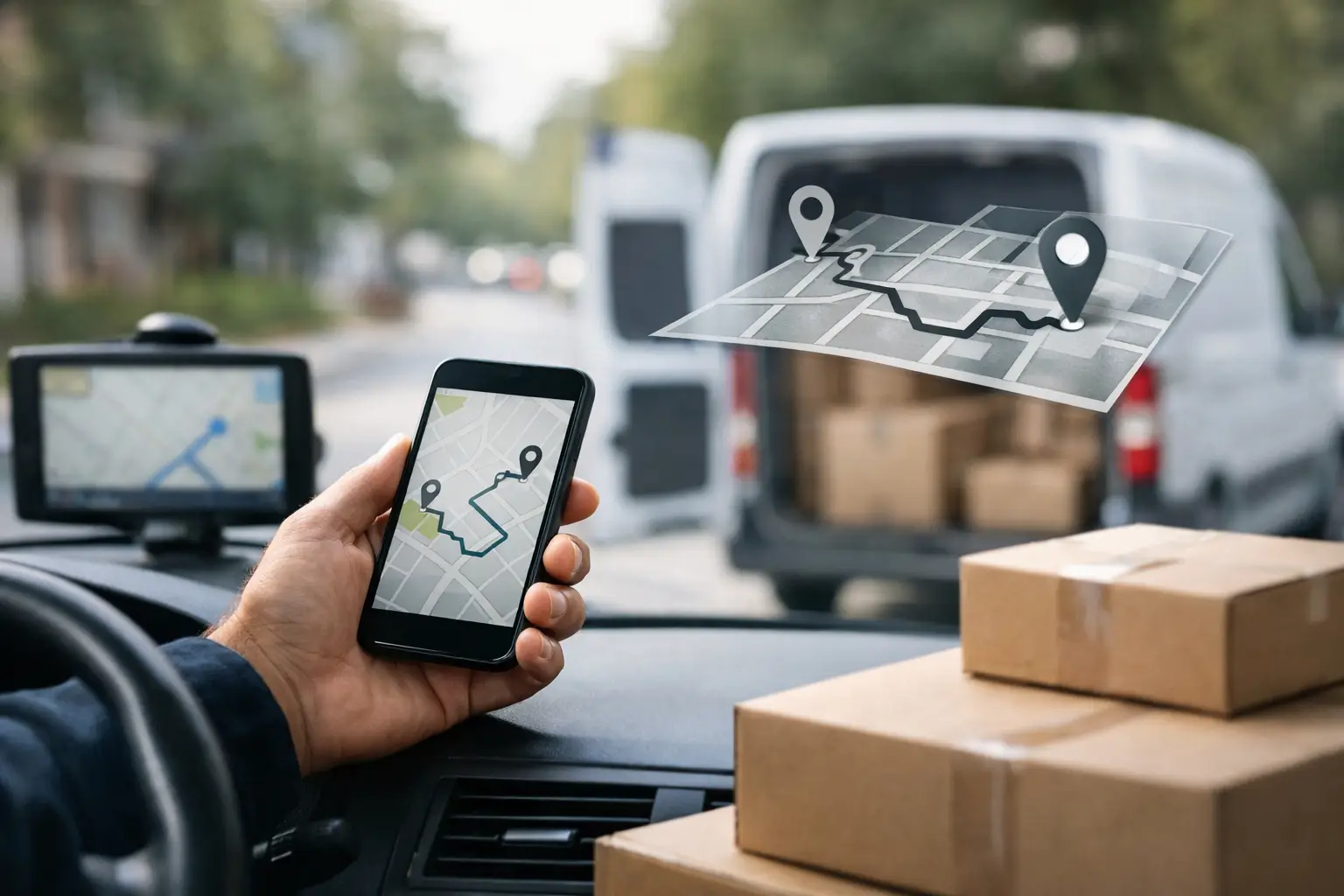
Your driver leaves the depot with 42 stops, a full van, and a route built in Google Maps one address at a time. By noon, traffic has shifted, two customers changed their delivery windows, and the whole day is already off pace. That is exactly why a guide to last mile routing matters. In last-mile work, small planning mistakes turn into extra miles, late arrivals, and money burned at every stop.
Last mile routing is the process of planning the most efficient sequence for deliveries, service calls, or sales visits during the final leg of a job. It sounds simple until real-world constraints show up: customer time windows, driver start locations, vehicle limits, traffic, road restrictions, and new stops added after the day has started. The difference between a basic route and a smart route is not just convenience. It is fuel cost, labor time, customer satisfaction, and whether your team finishes strong or falls behind.
What last mile routing actually controls
When people think about routing, they often picture stop order only. That is part of it, but not the whole job. Good last mile routing controls when a driver leaves, which stop comes first, how each stop fits promised service windows, and how to reduce waste across the full route.
For an individual driver, that can mean fewer backtracks, shorter drive time, and a cleaner day. For a dispatcher or fleet manager, it means balancing workloads across drivers, reacting when schedules change, and keeping jobs moving without a flood of calls and texts. If you run deliveries, field service, or route sales, routing is not an admin task. It is an operating lever.
A guide to last mile routing starts with constraints
The fastest route on paper is often the wrong route in practice. A route that ignores appointment times, driver territory, break schedules, or vehicle capacity may look efficient but fail as soon as the day begins.
That is why the first step in any guide to last mile routing is understanding constraints. These are the rules your routes must follow. Common ones include customer availability, driver shift length, stop priority, vehicle size, left-turn-heavy urban roads, and service time at each location. If your planning tool cannot account for those, you are not optimizing. You are just rearranging pins on a map.
This is also where many teams outgrow free mapping tools. A general navigation app is fine for one or two stops. It breaks down when a driver has 25, 50, or 100 stops and every minute matters. Last mile routing needs purpose-built logic, not manual guesswork.
Why manual planning costs more than it looks
Manual route planning hides its cost because the waste shows up in different places. One extra mile per stop does not sound dramatic. Spread that across dozens of stops, multiple drivers, and five or six days a week, and it adds up fast.
The bigger issue is inconsistency. One driver might know a territory inside out. Another may build routes in the order jobs arrive. A dispatcher may spend an hour every morning trying to make the day work. When routing depends on habit instead of a repeatable system, performance becomes uneven.
That affects more than fuel. Drivers lose time, customers wait longer, and managers spend too much of the day fixing preventable problems. If you want to crush your routes, consistency matters as much as speed.
How to build a stronger last mile route
Start with clean stop data. Bad addresses, duplicate entries, and missing unit numbers create problems before the vehicle even moves. If your drivers regularly call customers to clarify directions, that is a data issue as much as a routing issue.
Next, group the day by what actually matters operationally. Sometimes that means geography. Sometimes it means delivery window, route density, driver skill set, or vehicle type. There is no universal perfect method. A florist running same-day deliveries has different priorities than a pest control team or a beverage distributor.
Then optimize stop order with real conditions in mind. Traffic-aware planning matters, especially in metro areas where a route that looks shortest at 7 a.m. becomes painful by 9 a.m. Service time matters too. A route with ten quick drop-offs behaves very differently from one with ten 20-minute appointments.
After that, give drivers navigation that is built for multi-stop execution, not just turn-by-turn directions to a single destination. That sounds obvious, but many businesses still plan routes in one place and navigate in another, which creates room for errors. The smoother the handoff from planning to driving, the easier it is to stay on schedule.
The trade-offs every routing plan has to manage
There is no route plan that wins on every metric at once. That is one of the most important realities in last mile operations.
The shortest route is not always the fastest. The fastest route may cost more in tolls. The most balanced route across drivers may leave one high-priority customer with a later ETA. If you promise tight delivery windows, you may need to accept a few more miles to hit them reliably.
This is why routing should match the goal of the day. If your business wins on speed, optimize for arrival times. If margin is under pressure, focus on reducing total mileage and idle time. If customer experience is the main issue, prioritize accurate ETAs and fewer late stops. Smart routing is less about chasing a perfect formula and more about choosing the right trade-offs on purpose.
Routing for solo drivers vs. routing for teams
A solo driver needs speed and simplicity. They want to load stops, optimize quickly, and get moving without fighting the app. The route has to be easy to update if a customer cancels or a new stop is added mid-day.
A team operation needs another layer. Dispatchers have to assign work fairly, monitor progress, and adjust when drivers run ahead or fall behind. They also need visibility without micromanaging every turn. That is where routing becomes part planning tool, part coordination system.
For teams, the biggest gains often come from reducing communication drag. If a dispatcher can assign routes, push updates, and see route status in one workflow, the whole day runs cleaner. Drivers spend less time checking in, and managers spend less time playing traffic controller.
What to look for in last mile routing software
If you are evaluating tools, focus on outcomes before features. Can the software cut route planning time? Can it reduce miles? Can drivers use it without training headaches? Can dispatchers make changes without rebuilding the whole day?
The core capabilities should include multi-stop optimization, traffic-aware routing, route constraints, fast rerouting, and clear driver navigation. If you run a team, you should also look for dispatcher controls, route sharing, status visibility, and proof-of-delivery options if that is part of your workflow.
Ease of use matters more than feature overload. A powerful system that drivers avoid is not a win. The best routing tools give you operational muscle without slowing down the people who actually use them in the field.
This is where a platform like RoadWarrior fits naturally for many route-based businesses. It is designed for real multi-stop work, whether you are an independent driver trying to finish earlier or a team trying to coordinate routes without wasting half the morning in manual planning.
Metrics that tell you if routing is improving
You do not need a complex analytics stack to know whether routing is helping. Start with a few measures you can actually act on: miles driven per route, stops completed per hour, on-time arrival rate, route planning time, and fuel spend.
Watch for changes over a few weeks, not just one day. A Monday with light traffic can make any route look good. The real question is whether your routing process performs consistently across busy days, driver changes, and customer schedule shifts.
It also helps to compare planned routes with actual route behavior. If drivers regularly depart from the planned order, there may be a reason worth learning from. Sometimes the route was wrong. Sometimes the field conditions changed. Either way, that feedback loop helps you build better routes over time.
Common mistakes that keep routes from improving
The first mistake is treating routing like a one-time setup. Territories change, order volume changes, and traffic patterns change. Routing needs regular adjustment.
The second is over-prioritizing speed while ignoring usability. If entering stops takes too long or updating routes is frustrating, people will revert to manual workarounds.
The third is assuming drivers and dispatchers need the same thing. They do not. Drivers need clarity and momentum. Dispatchers need control and visibility. Good routing systems respect both jobs.
And finally, many businesses wait too long to fix the process because the current system is still functioning. But functioning is not the same as efficient. If your routes are eating time, gas, and patience, the cost is already there.
Last mile routing works best when it feels boring in the best way. Drivers know where to go, dispatchers know what is happening, customers get accurate service, and the day stops being a scramble. That is the real win - not flashy technology, but a route plan that helps your business move faster, spend less, and get more done before the clock runs out.
Tags