

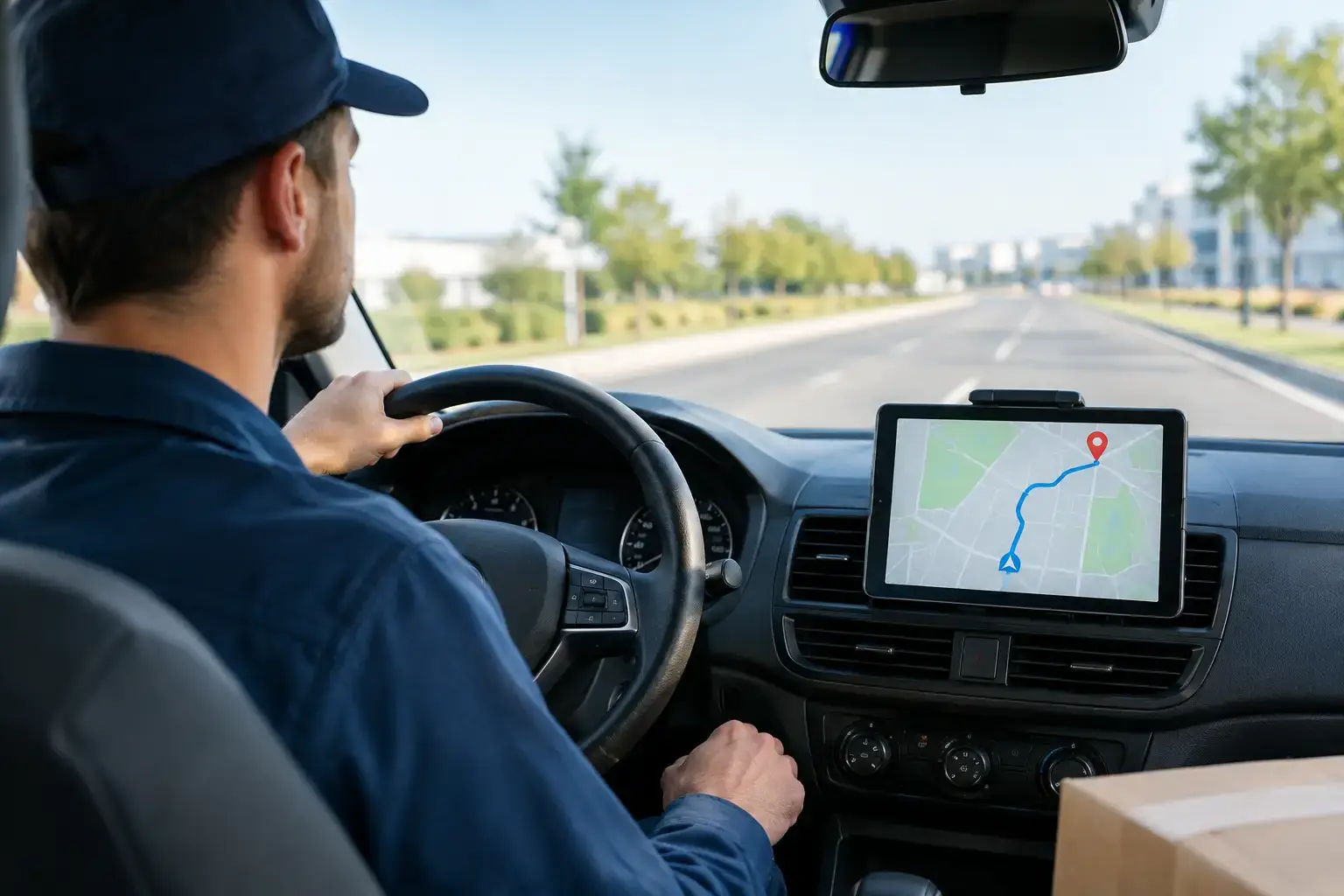
Delivery Navigation That Keeps Routes Moving
RoadWarrior Team
A route can look perfectly reasonable at 7:30 a.m. and turn into a mess by 10:00. A road closes, a customer is not ready, traffic stacks up near a school, and the stop sequence you built in a general map app starts costing time and fuel. Professional delivery navigation is built for that reality: not just getting from Point A to Point B, but getting through a full day of work with fewer wasted miles.
For drivers, couriers, field sales reps, and service teams, the difference is measurable. Better route execution means more completed stops, fewer backtracks, lower gas spend, and a better shot at getting home on time. The right tool does not replace a driver's judgment. It gives that judgment a stronger plan to work from.
Delivery navigation is more than turn-by-turn directions
Turn-by-turn GPS answers one question well: how do I get to the next address? That is useful, but it leaves a much bigger question unanswered: what is the smartest order for every address on today's route?
When a driver has 20, 50, or 200 stops, stop order matters. A route that zigzags across town can add miles without adding any value. Manually arranging stops in a map app may work for a handful of locations, but it becomes a daily time sink as the route grows. You are forced to compare pins, guess at traffic patterns, and rebuild the plan whenever something changes.
Delivery navigation designed for multi-stop work connects route planning with route execution. It helps organize the day's stops into an efficient sequence, then guides the driver through that sequence one stop at a time. That simple shift turns navigation from a passive map into an operational advantage.
What a working route needs before the first stop
A good route begins before the driver leaves the lot, driveway, or warehouse. Addresses need to be accurate, but route quality also depends on details that standard GPS tools often treat as an afterthought.
A driver may need to start at a depot, finish at home, avoid a toll road, keep a high-priority customer early in the schedule, or arrive during a narrow service window. A florist has to protect delivery timing. A field sales rep may need enough time at each account. A technician might carry equipment that makes certain roads or parking situations less practical. The fastest-looking route is not always the best route when the work itself has constraints.
This is why it helps to separate route optimization from navigation. Optimization determines a practical stop order based on the full job. Navigation gets the driver safely and efficiently from the current stop to the next one. You need both. Without optimization, drivers can follow excellent directions in a poor sequence. Without dependable navigation, a well-planned route falls apart on the road.
Start and end points change the math
Many routes are not simple loops. A courier may begin at a distribution center and finish near a different service area. An owner-operator may want the final stop close to home. A dispatcher may need drivers to return to a warehouse for a second load.
Set the true starting and ending locations before optimizing. This prevents a route from looking efficient on paper while sending a driver across town at the end of a long day. Small setup decisions can remove a surprising amount of deadhead mileage.
Priorities and appointments should lead the plan
Not every stop carries equal weight. A missed appointment can cost more than a few extra miles, while a late package may create a support call, a redelivery attempt, or a disappointed customer. Mark time-sensitive, high-value, and must-complete stops clearly.
There is a trade-off. Protecting a tight appointment window may make the total route slightly longer. That can be the right call when the alternative is a failed job. Strong delivery navigation gives teams enough control to honor business priorities without forcing them to map every turn by hand.
How to use delivery navigation without losing flexibility
The best route plan is a starting point, not a script carved in stone. Traffic changes. Customers reschedule. Drivers run into access issues. The goal is to give drivers a clear next move while making it easy to respond when the day goes off plan.
First, build the route from a clean stop list. Confirm street numbers, unit details, customer notes, and any special access instructions before dispatch. A bad address can derail a route faster than a bad optimization. For recurring routes, save the locations and update only what changed, rather than recreating the entire day from scratch.
Next, optimize the complete stop list with the constraints that matter to the job. Do not optimize only for distance if time windows, priorities, or start and end locations matter more. Then send the sequence to the driver in a format that is easy to use on the road. The driver should not need to scroll through spreadsheets, switch between multiple apps, or guess which stop comes next.
Once the route is live, treat real-time conditions as information, not failure. If traffic adds 20 minutes, a customer cancels, or a stop cannot be completed, update the plan when it makes sense. Constantly rebuilding a route for every minor delay can create distraction and frustration. Re-optimize when the change affects the rest of the day, not just because the map found a slightly different turn.
The daily costs of using general maps alone
General map apps are excellent at familiar travel. They are less suited to the repetitive, multi-stop decisions that define delivery and field work. The hidden cost is not usually one dramatic mistake. It is five extra minutes here, two miles there, and a few minutes spent arranging stops before every shift.
Over a month, those small losses show up in fuel receipts, overtime, missed service windows, and driver fatigue. They also limit capacity. If a driver spends 30 minutes manually planning and another 30 minutes driving an inefficient sequence, that is an hour that cannot be used for additional stops, customer follow-ups, or finishing earlier.
For a single driver, that time can directly affect earnings and quality of life. For a team, it becomes a coordination problem. Dispatchers need confidence that routes are assigned clearly, drivers need the latest information, and managers need a realistic view of what can be completed. A route plan that lives only in someone else's phone is hard to manage once the day begins.
RoadWarrior helps turn large address lists into optimized routes and gives drivers GPS guidance for the work ahead. For teams, shared route coordination can reduce the back-and-forth that happens when dispatchers, drivers, and customer updates are all working from different versions of the plan.
Give drivers useful control, not extra admin
Drivers know their territories. They know which apartment complexes are difficult to access, which loading docks back up at lunch, and which customers need a call before arrival. Good navigation software should make that local knowledge useful rather than forcing drivers into a rigid sequence that ignores it.
At the same time, too much flexibility can defeat the purpose of optimization. If every driver rebuilds routes independently, managers lose consistency and the business loses the ability to learn what is actually working. The practical middle ground is clear: dispatch or optimize a strong route, let drivers handle reasonable on-road changes, and record exceptions that should influence future plans.
Useful route notes matter here. A gate code, a preferred entrance, a warning about parking, or a reminder to collect a signature can save more time than shaving a block off the drive. Navigation gets the driver to the address. Operational details help them complete the stop.
Measure the result, not just the route
A route should earn its place in the workflow. Track the numbers that affect the business: stops completed, miles driven, drive time, on-time arrivals, failed stops, and fuel spend. You do not need a complicated dashboard to start. Comparing a few weeks of results before and after improving route planning can reveal where the time is going.
Be fair when judging results. A route with more miles may still be better if it handles urgent appointments, avoids repeated failures, or allows a driver to complete more profitable work. Likewise, the shortest route is not automatically the fastest if it sends drivers through congested areas at the wrong time of day. The goal is productive, reliable execution.
That is the standard worth aiming for: a route plan that makes the next stop obvious, gives drivers room to handle real conditions, and keeps the whole operation moving forward. When your navigation works as hard as your drivers do, every saved mile becomes room to crush more routes.
Tags