

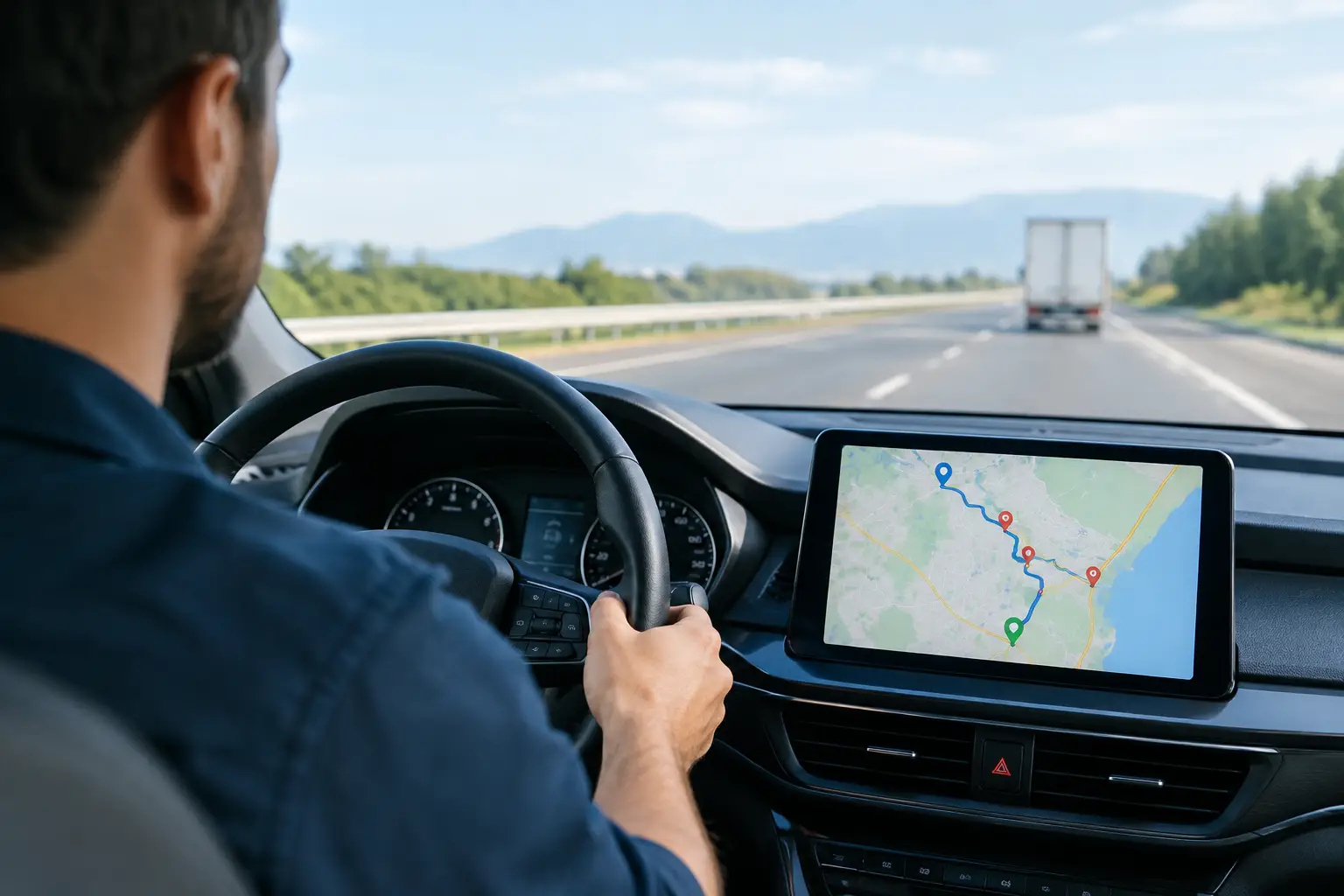
What Is Dynamic Route Planning for Drivers?
RoadWarrior Team
A customer adds a last-minute delivery. A service call runs long. Traffic turns a 15-minute highway stretch into a 45-minute delay. For a driver with 20, 50, or 200 stops, those changes can wreck a carefully planned day.
What is dynamic route planning? It is a route planning method that updates routes as real conditions change. Instead of treating the morning's route as fixed, it uses current information such as traffic, new stops, cancellations, driver status, delivery windows, and route constraints to recommend a better next move.
The payoff is practical: fewer wasted miles, less time stuck in traffic, better on-time performance, and a stronger chance of finishing the route without working late. For route-based businesses, dynamic planning turns disruption from a daily scramble into something the team can manage.
What Is Dynamic Route Planning?
Dynamic route planning builds and adjusts a multi-stop route based on changing conditions during the day. A driver or dispatcher may start with an optimized stop sequence, but the system can recalculate when the plan no longer matches reality.
For example, a courier begins with 35 deliveries. At 10:30 a.m., one recipient cancels, two rush deliveries are added, and an accident slows the main route. Dynamic planning evaluates those changes against the remaining stops and can reorganize the route to reduce delay and unnecessary backtracking.
That does not mean every route must be rebuilt from scratch every few minutes. Good dynamic route planning makes useful changes when they matter, while preserving the work already completed and avoiding needless disruption for drivers. The right balance depends on the business. A food delivery operator may need rapid adjustments all day, while a field service team may prioritize honoring appointment windows and technician assignments.
How Dynamic Route Planning Works in the Field
A dynamic route plan starts with more than street addresses. It needs the operating details that shape a workable day: stop locations, service times, delivery windows, vehicle limits, driver shifts, priorities, and any job-specific requirements.
The planning engine first sequences those stops into an efficient route. Then, as conditions change, it compares the original plan with current information. If a new stop fits naturally into a driver's remaining route, it may be inserted with minimal extra drive time. If traffic makes the original sequence inefficient, the remaining stops can be reordered.
For teams, dispatchers can see where work stands and assign changes to the right driver instead of relying on calls, texts, and guesswork. Drivers receive an updated stop order and navigation guidance, so they can stay focused on the road and the customer in front of them.
The quality of the result depends on the quality of the inputs. An incorrect address, an unrealistic service time, or a missing delivery window can produce a route that looks efficient on a screen but fails in the real world. Dynamic tools are powerful, but they cannot fix bad job data on their own.
Dynamic Planning vs. Basic Navigation
GPS navigation apps are excellent at getting a driver from Point A to Point B. Some can reroute around traffic after the driver has already chosen the next destination. That is useful, but it is not the same as dynamic route planning.
Dynamic planning looks at the entire remaining workload. Rather than only finding a faster road to the next stop, it can answer a bigger operational question: should this driver visit a different stop next? Should a new delivery go to another driver? Will this change cause a missed appointment later in the day?
A basic map also does not usually account for the realities of multi-stop work. Drivers may need to prioritize high-value customers, avoid tolls, stay within a shift, meet time windows, or use a vehicle that can handle a specific job. Those constraints are where a dedicated route planner earns its keep.
When Dynamic Route Planning Delivers the Biggest Gains
The need for dynamic planning rises with route complexity. A driver making five predictable stops in the same neighborhood may not need constant route changes. A driver with 60 deliveries across a metro area probably does.
It is especially valuable for last-mile delivery teams dealing with same-day orders, couriers handling rush pickups, and field service businesses responding to urgent calls. Sales reps can also benefit when meetings move or prospects become available with little notice. Landscapers, inspectors, real estate professionals, and mobile technicians face the same issue: the day rarely follows the calendar exactly.
For dispatchers, the advantage is coordination. If one driver falls behind, a dispatcher can move a nearby job to another driver before a customer is disappointed. That decision is easier when the team can see routes, remaining stops, and progress in one place.
The Trade-Off: Efficiency Should Not Create Chaos
A route is not better simply because it has fewer miles. If the system constantly reshuffles stops, drivers may lose confidence in the plan, customers may receive changing arrival expectations, and dispatchers may spend more time managing exceptions than saving.
That is why businesses need rules for when changes should happen. A high-priority pickup may justify rerouting immediately. A minor traffic slowdown may not. Some stops should be locked because the customer has a confirmed appointment or because a driver is already nearby. Others can remain flexible until the route is underway.
The best setup gives drivers and dispatchers control. Drivers need a clear route, reliable navigation, and a simple way to report completed, failed, or delayed stops. Dispatchers need visibility without micromanaging every turn. Dynamic planning should support professional judgment, not replace it.
How to Put Dynamic Route Planning to Work
Start by identifying the changes that cost your operation the most. It might be late-added orders, traffic delays, missed delivery windows, uneven driver workloads, or excessive daily mileage. Those problems determine which data and rules matter most.
Next, build routes with complete stop information. Include accurate addresses, time windows, priority levels, estimated service time, and any special instructions. If your drivers use different vehicles or cover separate territories, reflect that in the plan instead of forcing every job into one generic route.
Then establish a simple process for changes. Decide who can add or reassign stops, what counts as urgent, and when drivers should accept a revised sequence. Teams do not need a complicated command center. They need a repeatable workflow that prevents a new job from becoming five phone calls.
Finally, measure the results that affect the business: miles per route, drive time, jobs completed, on-time arrival rate, fuel spend, and overtime. A route optimizer should produce gains you can see in daily operations, not just a prettier map. Tools such as RoadWarrior can help drivers and teams optimize multi-stop routes while keeping dispatch and navigation connected to the work happening on the road.
Build a Route Plan That Can Handle Real Life
A fixed route is a forecast. Dynamic route planning is what helps that forecast survive the day.
Start with the best possible sequence, then give your drivers and dispatchers the visibility to adapt when the road, the customer, or the workload changes. When each change is handled with purpose instead of panic, your team can cut wasted miles, protect service commitments, and get home earlier with more work done.
Tags