

How to Optimize Delivery Sequences and Save Time
RoadWarrior Team
A delivery route can look efficient on a map and still fall apart by 10 a.m. One late stop creates a missed time window, a driver doubles back across town, and a carefully planned day turns into extra miles, fuel, and customer calls. Learning how to optimize delivery sequences means planning the order of stops around the work that actually happens on the road - not just around a neat-looking line on a map.
For a driver with five stops, sequencing may be simple. For a courier, field service team, or local delivery business handling 30, 80, or 200 stops, manual planning quickly becomes expensive. The right sequence helps you spend less time driving, protect appointment commitments, and give drivers a realistic shot at finishing on time.
Start with the constraints that matter
The shortest route is not always the best delivery sequence. A route that saves three miles but arrives before a customer opens, after a receiving dock closes, or before a driver has the right inventory is not optimized. Good sequencing starts by identifying the conditions that cannot be ignored.
Time windows are usually the biggest factor. A pharmacy delivery that must arrive before noon, a commercial customer that only accepts shipments from 9 to 11 a.m., and a residential delivery that requires a signature after 4 p.m. all need to shape stop order. Put rigid appointments into the route first, then arrange flexible stops around them.
Service time matters too. Dropping a small parcel may take two minutes. Bringing equipment to a job site, collecting a signature, or completing a service call may take 20 minutes or more. If every stop is treated as equal, arrival estimates become unreliable and the final third of the route gets squeezed.
Also account for vehicle and driver realities. Weight limits, refrigerated goods, hazardous materials, parking restrictions, truck height, driver breaks, and pickup-before-delivery requirements can all change the right order. The goal is not a mathematically perfect route in isolation. It is a sequence a real driver can execute without constant workarounds.
How to optimize delivery sequences before drivers leave
The best time to prevent route problems is before the first vehicle pulls away. Clean inputs make better routes, while bad addresses and vague delivery instructions force costly decisions on the road.
Clean up stop data first
Verify addresses, unit numbers, customer names, phone numbers, and delivery notes before route planning begins. A missing suite number can cost more than a mile or two of inefficient routing because the driver may have to call, park twice, or return later.
Use delivery notes to capture details that maps do not know: the correct entrance, gate codes, loading dock instructions, available parking, signature requirements, or a preferred drop location. For repeat customers, this knowledge should stay with the account rather than living only in one experienced driver’s memory.
Group stops by geography, then apply timing
A practical sequence often begins by clustering stops that are close together. Serving one neighborhood, business park, or side of town at a time reduces backtracking and makes the route easier to recover when traffic changes.
But geography comes second to hard timing commitments. If a stop across town has a strict morning window, it may need to happen before a nearby flexible delivery. After that appointment is complete, the driver can work through the closest logical cluster rather than zigzagging across the service area.
For dense urban routes, factor in street direction, parking, and building access. A sequence that keeps a driver on the same side of a busy corridor can be faster than one that repeatedly requires left turns, U-turns, or crossing congested intersections. In suburban and rural routes, the bigger gain may come from eliminating long out-and-back legs.
Build the route around loading order
Route optimization and load planning need to agree. If the first delivery is buried behind the last delivery, the driver loses time searching through the vehicle and risks damaged or misplaced items.
Load the vehicle in reverse stop order when possible, so the first items out are easiest to access. Keep fragile, temperature-sensitive, or high-priority deliveries separated and clearly marked. This is especially valuable for drivers with many small stops: saving one minute at each delivery can add up to an hour over a full day.
Use route optimization software for the math
Manual sequencing works for a handful of stops, but it gets unreliable as stop counts grow. The number of possible stop combinations rises fast, and no dispatcher or driver should have to compare dozens of map pins while trying to account for traffic, time windows, and service times.
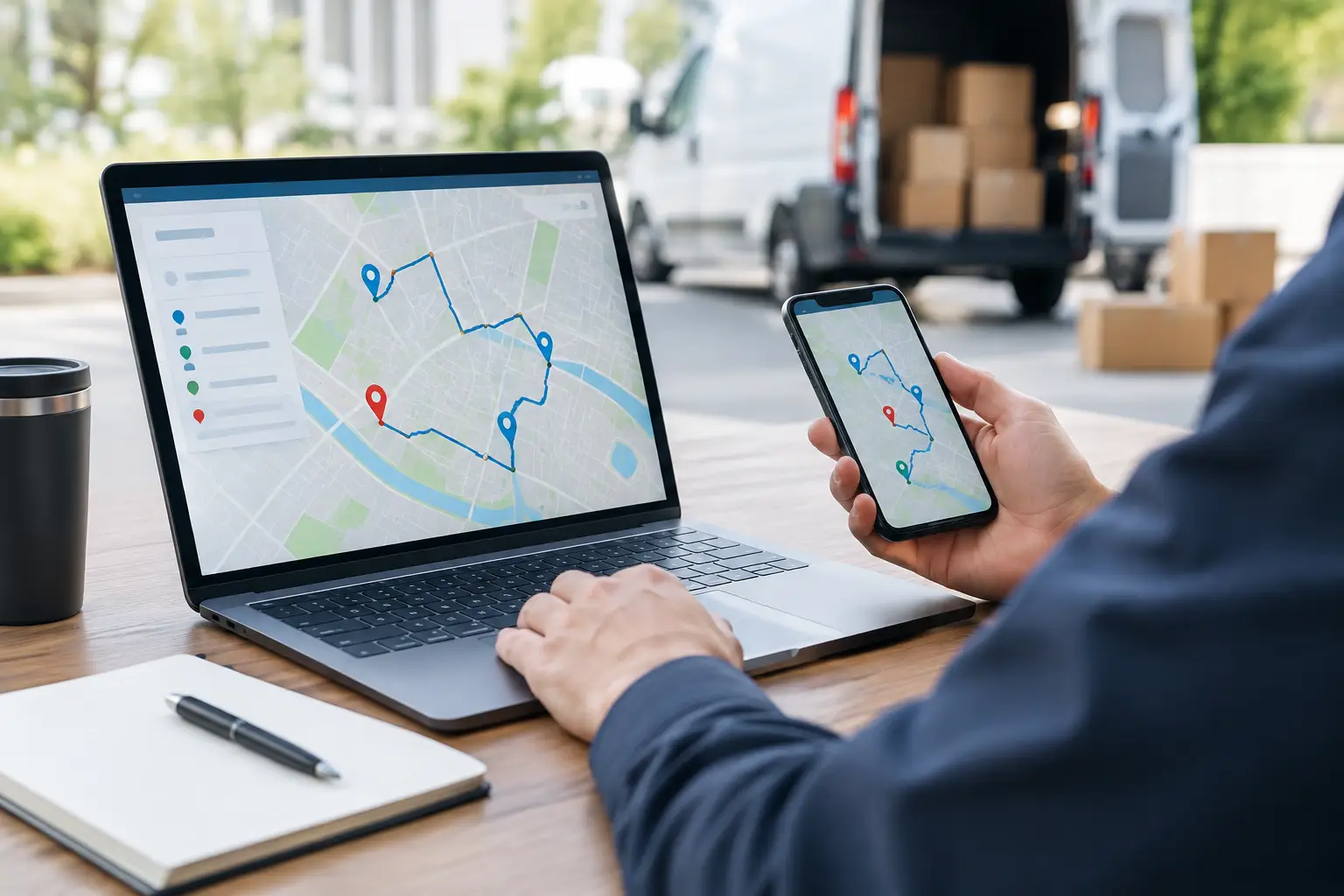
A route optimization tool can organize multi-stop routes using real road networks and routing constraints, then turn the plan into turn-by-turn navigation. Instead of entering each address separately into a general mapping app, drivers begin with a stop order designed to reduce unnecessary mileage.
RoadWarrior can optimize routes with up to 500 stops per day, helping individual drivers and teams build a workable sequence in minutes. For dispatchers, a shared workflow also reduces the handoff problems that happen when route changes are sent through texts, calls, and spreadsheets.
Software is not a replacement for local knowledge. A driver may know that a particular apartment complex is impossible at school pickup time or that a loading dock is routinely blocked after 2 p.m. The strongest process combines optimization technology with that on-the-ground insight. Let the system do the heavy route math, then make informed adjustments where experience says the plan will fail.
Keep the sequence flexible once the route starts
A route is a plan, not a promise. Traffic collisions, customer cancellations, failed access attempts, new pickups, and weather can make the original sequence less efficient after departure. The key is knowing when to adapt and when to stay the course.
Reoptimize when a change materially affects the remaining route. A canceled stop, a new same-day delivery, or a major traffic delay may justify recalculating the stop order. A five-minute slowdown usually does not. Constantly reshuffling stops can confuse drivers, create missed appointments, and waste attention that should be focused on safe driving.
Teams should define clear rules for route changes. For example, drivers can handle minor adjustments within a geographic cluster, while dispatch approves changes that affect time-window customers, assigned territories, or another driver’s workload. That balance gives drivers autonomy without losing operational control.
Communication matters just as much as the revised route. If a customer will be late, send an accurate update early instead of waiting until the delivery window has already passed. If a driver cannot access a location, record the reason and any useful details immediately. Each exception is data that can improve tomorrow’s sequence.
Measure whether the sequence is actually improving
It is easy to call a route successful because every stop was completed. That is the baseline. To find real savings, compare route performance over time.
Track planned miles against actual miles, planned route duration against actual duration, on-time delivery rate, stops completed per hour, fuel use, and failed-delivery or reattempt rates. For teams, also look at workload balance. One driver finishing two hours before everyone else may signal that stops were assigned poorly, even if each individual route was technically efficient.
Do not judge every route by one day. Road closures, unusual traffic, and customer delays happen. Look for patterns across weeks: repeated late deliveries, recurring backtracking, addresses that routinely cause trouble, or territories that are too large for one driver. Those patterns tell you where a better sequence, different delivery window, or territory adjustment will produce the biggest return.
Build a repeatable sequence process
The best delivery operation does not rebuild everything from scratch each morning. It uses a repeatable process: verify stops, apply time windows and service rules, optimize the route, load in stop order, communicate changes, and review exceptions at the end of the day.
That process should still leave room for different route types. A field sales rep may prioritize appointments and travel-time reliability. A parcel driver may prioritize density and fast stop turnover. A service technician may need the right parts and skill set at each job before distance becomes the deciding factor. Optimization works best when it reflects the job, not when every business follows the same template.
A better delivery sequence is not just about shaving minutes off a map. It gives drivers a calmer, clearer day, helps customers get reliable service, and protects the margin on every route. Put the right stops in the right order, keep the plan adaptable, and give your team the tools to crush their routes without burning extra fuel or extra hours.
Tags